
 Book a call with us (30 Minute Meeting)




 Krishna Mishra
 23 October 2026
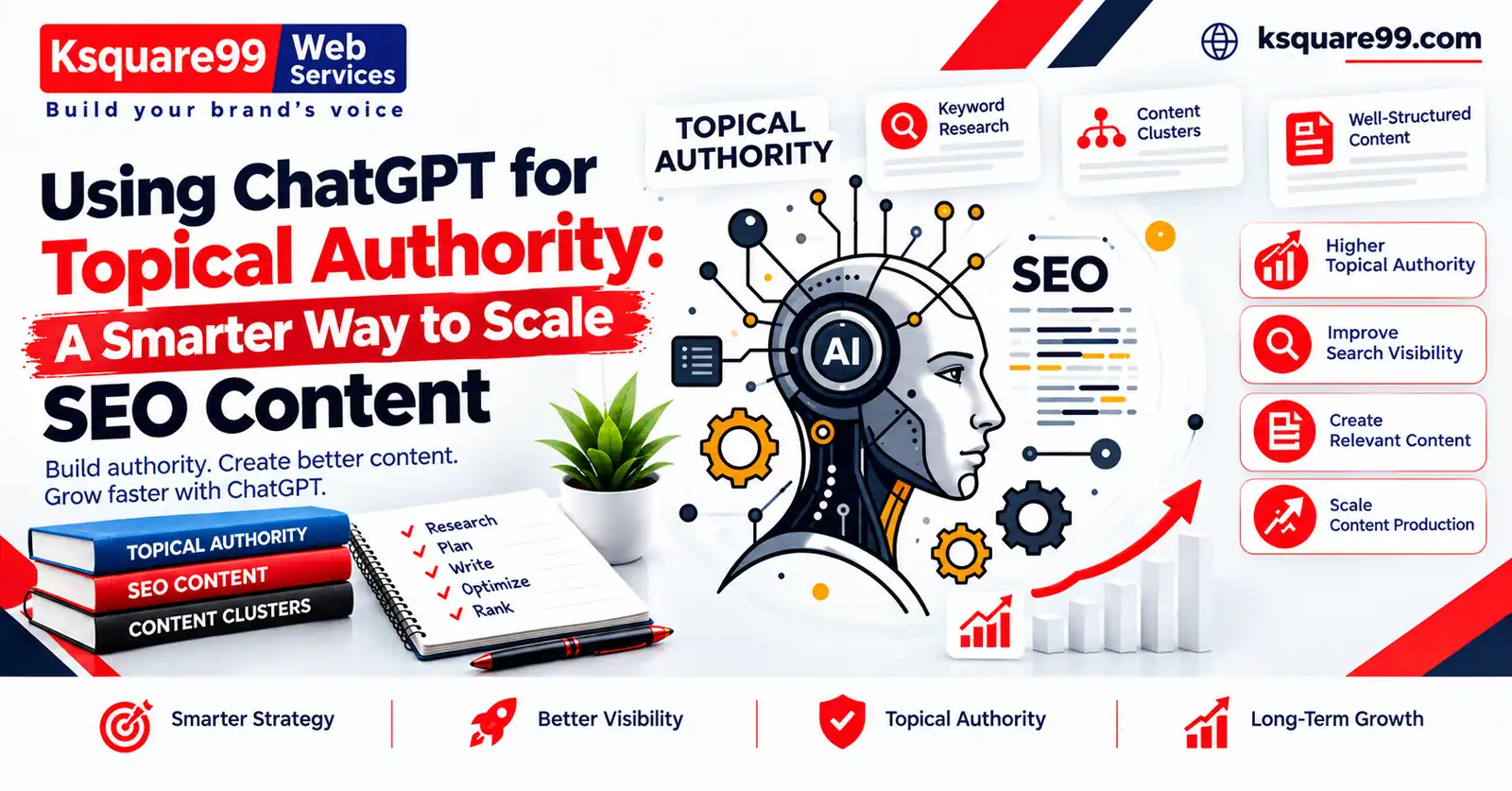
Using ChatGPT for Topical Authority: How to Scale SEO Content Smarter in 2026
Use ChatGPT to build topical authority, create SEO-friendly content clusters, find relevant keywords, and scale content production in 2026 while improving search visibility, relevance, and user experience.
Publishing more content does not always mean ranking better. Many businesses learn this the hard way. They post blog after blog, yet traffic stays flat, and leads don't move.
The missing piece is usually topical authority. And this is where ChatGPT can really help, as long as you use it the right way.
In this guide, we'll walk you through how to use ChatGPT for topical authority without losing quality, originality, or focus on your business goals.
Understanding Topical Authority in Practical Terms
Topical authority means search engines see your website as a trusted source on a subject. Not just for one keyword, but for the whole topic around it.
Think of it like doctors. A general physician knows a little about many things. A heart specialist knows almost everything about the heart. When someone has a heart problem, they trust the specialist. Google and AI search tools work similarly.
When your site covers a topic in depth, answers related questions, and connects pages in a logical way, search engines start to trust it. That trust shows up as better rankings, more featured answers, and stronger visibility in tools like ChatGPT and Google AI Overviews.
Where ChatGPT Fits into the SEO Workflow
ChatGPT is not a replacement for an SEO strategist. It works more like a fast, tireless assistant. Used well, it can save hours on tasks like these:
- Brainstorming subtopics and related questions
- Grouping keywords by search intent
- Creating content outlines and briefs
- Drafting FAQs and first drafts
- Suggesting internal linking ideas
- Rewriting meta titles and descriptions
What it should not do is make the final call. Keyword data, competitor gaps, and business priorities still need human judgment. The best results come when ChatGPT speeds up the work and people guide the direction.
Building Topic Clusters with AI Support
A topic cluster is a group of pages built around one subject. It has one main pillar page and several supporting pages that go deeper into related subtopics. All of them link to each other, which helps search engines understand how your content fits together.
Here's a simple way to build one with ChatGPT:
- Pick a core topic tied to your business, such as local SEO for clinics.
- Ask ChatGPT to list the questions, problems, and subtopics people search for around it.
- Check those ideas against real keyword data from Google Search Console or your SEO tool.
- Group them by intent: learning, comparing, or ready to buy.
- Map each group to one page and plan how it links back to the pillar.
The AI gives you a wide starting list. Your research decides what makes the final cut. If you'd like expert help mapping clusters around real search demand, our SEO services team can help.
Prompting with Intent, Not Instructions
Most people use ChatGPT like a vending machine: Write a 1000-word blog on X. What comes out is usually generic.
A better way is to share the purpose behind the content. Tell it who the reader is, what problem they have, what you want them to do next, and what makes your brand different.
Compare these two prompts:
- Weak: Write a blog about home loans.
- Strong: Write for first-time home buyers in Delhi who are unsure about eligibility. Explain the basics in simple words, address their common worries, and guide them to check their eligibility with us.
The second prompt gives the AI context, and context leads to sharper, more useful content. Treat ChatGPT like a new team member who needs a proper brief, not a one-line order.
Maintaining Quality and Originality at Scale
Scaling content is easy. Scaling good content is hard. AI drafts can sound flat, repeat the same points, or include facts that are simply wrong.
A few habits keep quality high:
- Add real experience. Include client results, examples, data, or expert opinions that ChatGPT cannot know.
- Fact-check everything. Verify numbers, dates, and claims before you publish.
- Edit for voice. Rewrite sections so they sound like your brand, not a template.
- Avoid overlap. Make sure two pages don't target the same intent and compete with each other.
Google rewards helpful, people-first content. That's why E-E-A-T is the foundation of AI search today. Before publishing, run each page through a solid on-page SEO checklist as well.
Aligning AI-Driven Content with Business Goals
Not every topic deserves a blog post. Your content should support what your business actually sells.
Before building a cluster, ask yourself:
- Does this topic attract people who could become customers?
- Does it support one of our service or product pages?
- Will it build trust at an important stage of the buying journey?
For example, a dental clinic gains far more from a page on the cost of dental implants in Gurgaon than from general tooth trivia. Use ChatGPT to widen your list of ideas, then filter every idea through business value. This is exactly where our content marketing services begin.
Measuring Impact Beyond Rankings
Rankings are only one part of the picture. To see whether topical authority is really building, track these signals:
- Topic-level visibility: how many keywords across the whole cluster rank, not just one
- Cluster traffic: organic visits to all pages in the cluster together
- Engagement: time on page, scroll depth, and clicks on internal links
- Conversions: leads, calls, and form fills that start from content
- AI visibility: whether your brand is mentioned or cited in ChatGPT, Gemini, Perplexity, or Google AI Overviews
That last point matters more every month. It's where Answer Engine Optimization (AEO) and Generative Engine Optimization (GEO) come in, helping your content earn visibility inside ChatGPT and other AI tools. Not sure where your site stands? Start with an SEO audit.
Why Strategy Still Leads the Process
ChatGPT can write a hundred pages in a day. But without a plan, those pages may target the wrong keywords, repeat each other, or attract people who will never buy.
Strategy answers the big questions: which topics to own, in what order, for which audience, and why. AI handles the speed. People handle the thinking. Flip that order, and you get plenty of content with very few results.
A Smarter Way Forward
Using ChatGPT for topical authority isn't about producing more content. It's about producing the right content faster, with a clear plan behind it.
Start with one topic that matters to your business. Build a focused cluster around it. Let AI speed up the research and drafting, then add your own expertise, data, and voice. Measure results at the topic level and keep improving.
Want to build topical authority that brings leads, not just traffic? Talk to the Ksquare99 team. We combine AI-powered workflows with proven SEO strategy to help brands grow across Google and AI search.
Frequently Asked Questions
1. Can ChatGPT alone build topical authority for my website?
No. ChatGPT can speed up research, outlines, and drafts, but authority comes from accurate, experience-backed content and a clear strategy. Human editing and real expertise are still essential.
2. Does Google penalize AI-generated content?
Google looks at content quality, not how it was created. Helpful, original, and accurate content can rank well even if AI helped write it. Low-value content produced in bulk is the real risk.
3. How many articles do I need to build topical authority?
There's no fixed number. It depends on how broad your topic is. Most clusters start with one pillar page and 8 to 15 supporting articles, then grow based on what performs.
4. How long does it take to see results?
Most websites start seeing movement within 3 to 6 months. The timeline depends on competition, site health, and how consistently you publish.
5. Can topical authority help my brand appear in ChatGPT answers?
Yes. AI tools prefer sources that cover a topic clearly and in depth. Strong topical authority, combined with good structure and trust signals, improves your chances of being cited.