
 Book a call with us (30 Minute Meeting)



 Krishna Mishra
 19 August 2026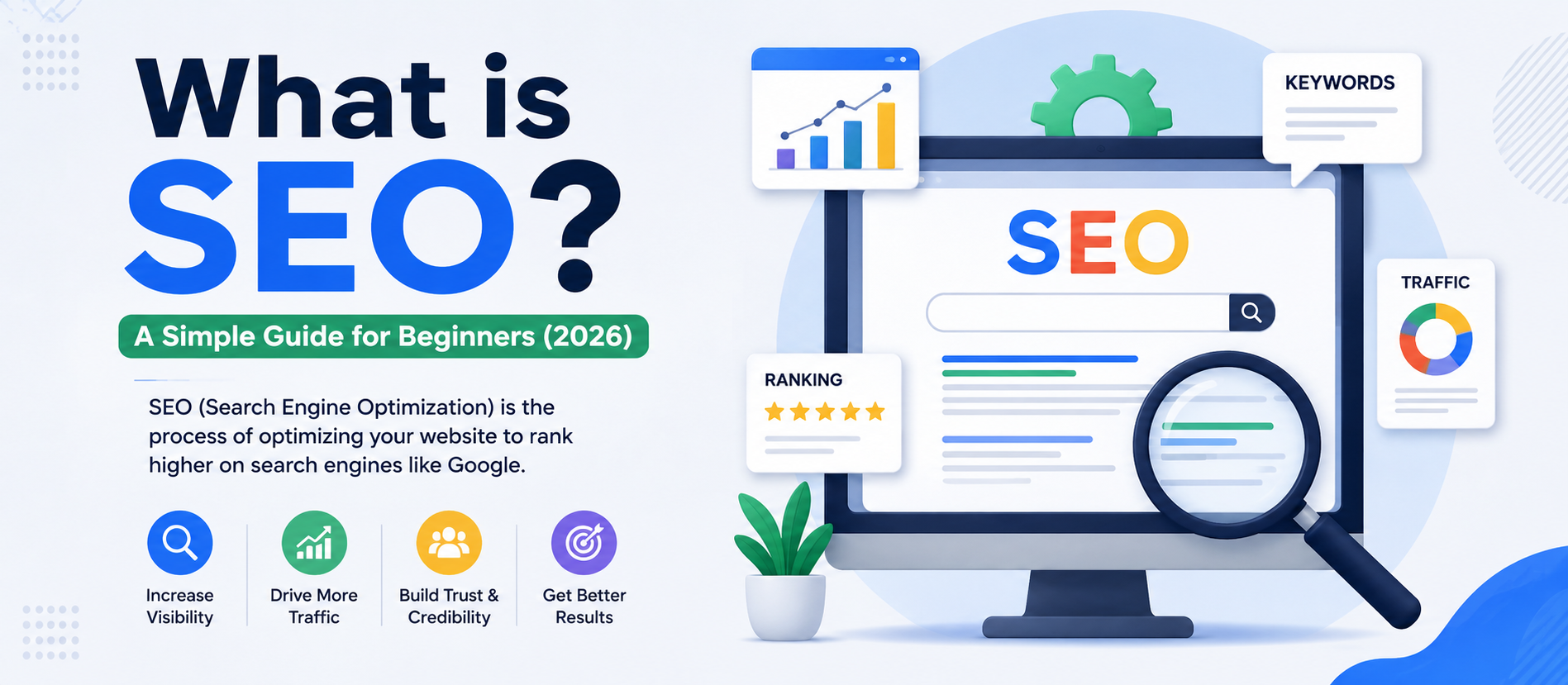
What Is SEO? Benefits and How SEO Works
Learn what is SEO, how search engines work, and simple strategies beginners can use to improve website rankings, traffic, and online visibility.
If you own a website or run a small business online, you've
probably heard people talk about SEO. Maybe someone told you, "You need
SEO to get more customers," and you nodded along without really knowing
what that means. Don't worry — you're not alone. Most business owners feel the
same way when they first hear this term.
In this blog, we'll explain what SEO is in plain, simple
English. No confusing jargon. No technical mumbo-jumbo. Just a clear
explanation that actually makes sense.
What is SEO?
SEO stands for Search Engine Optimization. In simple words,
it's the process of making your website better so that it shows up higher on
Google when people search for something related to your business.
Think about it this way. When you want to find a good
restaurant near you, what do you do? You probably open Google and type
something like "best restaurants near me." Google then shows you a
list of results. The restaurants that appear on the first page get more
visitors, more calls, and more customers. The ones buried on page five? Almost
nobody finds them.
SEO is what helps a website earn that spot on page one. It's
not magic, and it's not about tricking Google. It's about making your website
genuinely useful, easy to understand, and trustworthy — both for your visitors
and for search engines.
Why Does SEO Matter for Your Business?
Here's a simple fact: most people never scroll past the
first page of Google. If your website isn't showing up there, you're basically
invisible to a huge number of potential customers.
Good SEO helps you:
- Get
found by people who are already looking for what you sell
- Build
trust, because people generally trust websites that rank higher
- Bring
in visitors without paying for every single click, unlike ads
- Grow
steadily over time, since good rankings tend to stick around
Unlike paid ads that stop working the moment you stop
paying, SEO keeps working for you in the background, month after month.
How Does SEO Actually Work?
Search engines like Google use automated programs to scan
and understand websites. They look at hundreds of factors to decide which pages
deserve to rank higher for a particular search. While nobody outside Google
knows the exact formula, years of experience have shown that SEO generally
comes down to three main areas.
1. On-Page SEO
This is everything you do directly on your website to make
it search-friendly. It includes things like:
- Using
the right keywords naturally in your content
- Writing
clear, helpful headlines and page titles
- Making
sure your content actually answers what people are searching for
- Organizing
your pages so both users and Google can navigate easily
2. Off-Page SEO
This covers what happens outside your website that still
affects your ranking. The biggest part of this is backlinks — when other
trustworthy websites link back to your site. Think of it like a vote of
confidence. The more quality websites that vouch for you, the more Google
trusts your site too.
3. Technical SEO
This is the behind-the-scenes work that makes sure your
website runs smoothly. It includes:
- Making
your site load faster
- Making
sure it works well on mobile phones
- Fixing
broken links and errors
- Helping
search engines crawl and understand your site properly
When all three areas work together, that's when you start
seeing real results.
Common SEO Myths You Should Ignore
There's a lot of confusing and outdated advice floating
around online. Let's clear up a few common myths:
Myth: SEO gives instant results. Truth: SEO takes
time. Most businesses start seeing real movement within a few months, not a few
days.
Myth: You just need to stuff your page with keywords.
Truth: Overusing keywords can actually hurt your ranking. Google rewards
content that reads naturally and genuinely helps the reader.
Myth: SEO is a one-time task. Truth: SEO is ongoing.
Search engines keep updating their rules, and your competitors keep trying to
outrank you. Staying on top requires consistent effort.
How Long Does SEO Take to Show Results?
This is one of the most common questions we hear, and
honestly, the answer depends on a few things — your industry, how much
competition you have, and the current condition of your website. That said,
most businesses begin noticing visible improvements within 60 to 90 days of
consistent, well-planned SEO work.
Final Thoughts
SEO isn't as complicated as it sounds once you break it
down. At its core, it's simply about making your website easier to find, easier
to trust, and easier to use — for both your visitors and search engines.
Businesses that invest in SEO today are the ones building long-term,
sustainable growth instead of relying only on ads that stop the moment the
budget runs out.
If you're not sure where your website currently stands, getting a professional SEO audit is a good place to start. It shows you exactly what's working, what's holding you back, and what steps will actually move the needle for your business.